
Medical tourism in Shanghai — eight Tier-3A hospitals, real 2026 costs.
Shanghai treats more international patients than any other Chinese city. Eight Tier-3A teaching hospitals run full international departments; through SinoCareLink, a Straumann implant with crown costs from $1,699 and a checkup package $399–$699; an IVF cycle costs about a third of New York or London prices.
✓ Written quote before you pay·✓ No obligation·✓ Reply within 24 hours
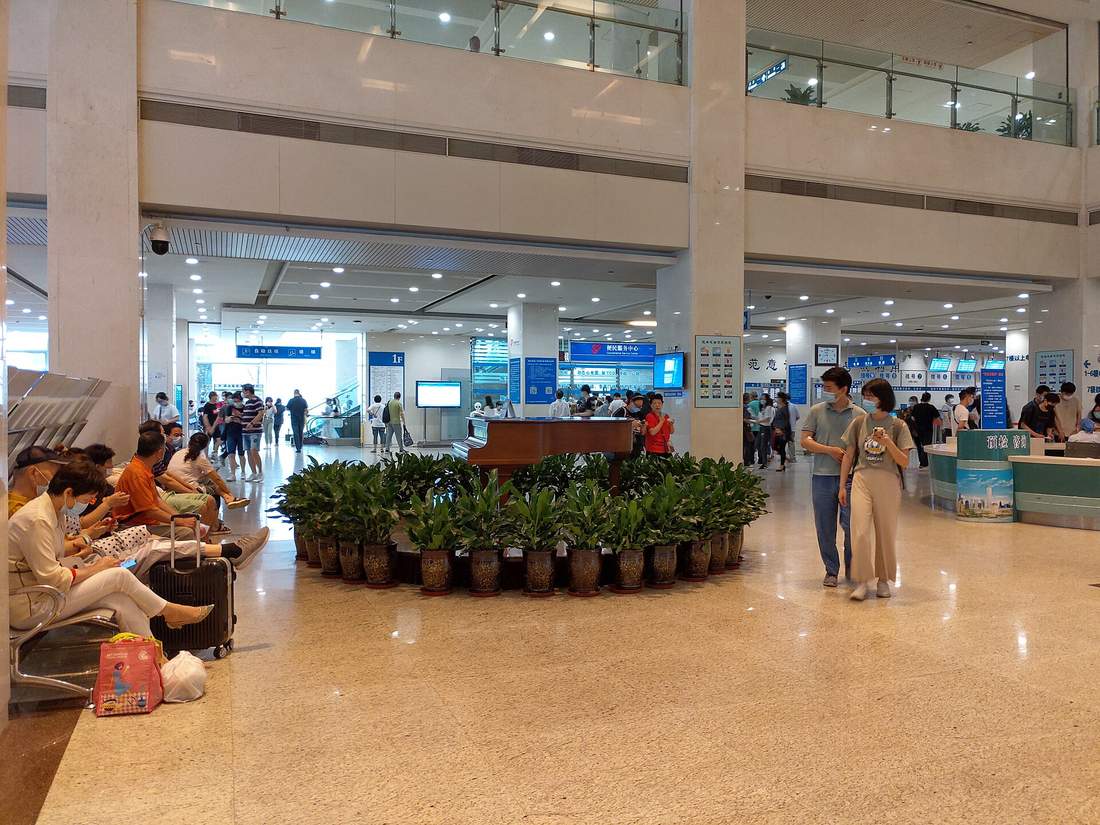
Shanghai treats more international patients than any other Chinese city, and it is not close. The city runs eight Tier-3A teaching hospitals with full international departments, two foreign-built premium private hospitals, and a 9th People's Hospital dental wing that handles more implant cases per year than most Bangkok flagship clinics combined. Through SinoCareLink, a single Straumann implant with crown costs from $1,699, and a checkup package $399–$699, with MRI and other add-ons priced separately. A single IVF cycle runs $8,333 to $12,500 — about a third of New York or London pricing3. The flight from Los Angeles is direct4, and Pudong International is the second-busiest airport in mainland China. If you are picking one Chinese city for a medical trip and you do not have a strong reason to go elsewhere, Shanghai is the default answer. Here is how the city is actually laid out for foreign patients in 2026 — which hospitals, what they cost, what to fly into, and where Shanghai is honestly weaker than Beijing, Guangzhou, Shenzhen, or Chongqing. Citizens of some countries can visit China visa-free for up to 30 days for business, tourism, family visits, exchanges or transit. Medical treatment is not on that list, so check the right entry route for your passport with the Chinese embassy or consulate before you book.
Why Shanghai Is Asia's Top Medical Tourism Hub
Shanghai's structural advantage is density. Within an 8-kilometer radius of the Bund you can find Zhongshan Hospital (Fudan), Huashan Hospital (Fudan), Ruijin Hospital (Jiao Tong), Renji Hospital (Jiao Tong East), Shanghai 9th People's Hospital, and the Shanghai Cancer Center — six Tier-3A institutions, each ranked top-five nationally in at least one specialty. Add Jiahui Health and United Family Pudong on the private side, and a foreign patient can reach a credentialed second opinion within 30 minutes by taxi from any central hotel.
The city's international-patient infrastructure has been compounding for two decades. Shanghai opened China's first foreign-friendly clinic — the Worldlink Medical Center — in 1996, and the major Tier-3A hospitals built dedicated international departments through the 2000s as the expat population grew past 200,000. Today, English-language treatment plans, bilingual nursing, and direct-billing relationships with Cigna Global, Bupa, and Allianz Worldwide Care are standard at the international wings, not exceptions5.
What makes Shanghai different from Beijing is breadth versus depth. Beijing has the country's single best center for several specialties (Peking Union for general medicine, Fuwai for cardiac, 301 for military-grade trauma), but its hospitals are spread across a much larger geographic footprint and the international patient experience varies more between institutions. Shanghai's clinical ceiling is roughly equivalent on most procedures — and the patient experience is more uniform.
Top 8 Shanghai Hospitals for International Patients
These eight institutions handle the majority of foreign-patient cases in Shanghai. Six are public Tier-3A teaching hospitals with international departments; two are foreign-built premium private hospitals.
| Hospital | Core specialty | International dept location | English level | Price tier |
|---|---|---|---|---|
| Zhongshan Hospital (Fudan) | General medicine, cardiology, hepatobiliary surgery | 18th floor, main tower, Xuhui campus | A+ | $$$ |
| Huashan Hospital (Fudan) | Neurology, neurosurgery, infectious disease | International Medical Center, Wulumuqi Rd | A | $$$ |
| Renji Hospital (Jiao Tong) | OB/GYN, IVF, reproductive medicine | East campus international wing, Pudong | A | $$ |
| Ruijin Hospital (Jiao Tong) | Hematology, CAR-T cell therapy, endocrinology | Building 9 international department, Huangpu | A+ | $$$ |
| Shanghai 9th People's Hospital | Dental implants, oral/maxillofacial surgery, plastic surgery | Zhizaoju Rd campus, dedicated international floor | A | $$ |
| Shanghai Cancer Center (Fudan) | Oncology, radiation therapy, surgical oncology | Dong'an Rd main building | A | $$$$ |
| Jiahui Health | Comprehensive premium private | Free-standing campus, Jianguo Rd | A+ | $$$$ |
| United Family Pudong | Comprehensive premium private | Free-standing campus, Pudong | A+ | $$$$ |
Zhongshan Hospital (Fudan University) runs Shanghai's largest hepatobiliary surgery program and one of the country's three flagship cardiology departments. The 18th-floor international department is the city's busiest international wing by patient volume — bilingual coordinators, fully English-language records, direct-billing for major international insurers.
Huashan Hospital (Fudan University) is the national reference center for neurology and neurosurgery. The hospital pioneered awake-craniotomy procedures in mainland China and treats more international neurology cases than any other Chinese institution.
Renji Hospital (Jiao Tong University) runs the largest IVF program in eastern China, with cycles handled at the East campus international wing in Pudong. Single-cycle IVF prices are roughly a third of US private clinic pricing3.
Ruijin Hospital (Jiao Tong University) hosts one of China's three CAR-T cell therapy centers approved for international clinical trials and has a hematology department with national reference status.
Shanghai 9th People's Hospital is the city's volume leader for dental implants and oral surgery, and the country's single largest center for orthognathic and craniofacial cases. Implant volumes here exceed 8,000 fixtures per year — several times a busy Bangkok flagship clinic.
Shanghai Cancer Center (Fudan University) runs the largest radiation oncology program in eastern China, including proton therapy at the Pudong satellite. International patient flow is smaller than Zhongshan or Ruijin.
Jiahui Health is a foreign-built integrated campus on Jianguo Road, with English as the operating language and a hospitality model closer to Bangkok's Bumrungrad than to a Chinese public hospital.
United Family Pudong is the eastern-Shanghai member of the United Family Healthcare group, with a free-standing campus, English-native staff, and direct integration with most US-issued international insurance plans.
Shanghai Cost Matrix: 4 Procedures vs Bangkok and the US
Here is what the procedures Shanghai is actually known for cost in 2026, compared with Bangkok and a US private-pay benchmark.
| Procedure | Shanghai (SinoCareLink price where marked) | Bangkok (JCI private) | US private | Savings vs US |
|---|---|---|---|---|
| Single Straumann implant + zirconia crown | From $1,699 (SinoCareLink) | $1,800–$3,30010 | $4,000–$6,000 | About 10–70%, depending on implant system and crown |
| Full body checkup (basic, ~30 items) | $399–$499 Essential (SinoCareLink) | $300–$600 | $1,500–$3,000 | About 65–85% |
| Premium executive checkup (cardiac MRI, full-body MRI, oncology screening) | $599–$699 Premium (SinoCareLink), incl. low-dose chest CT; MRI and other add-ons extra | $800–$1,800 | $4,000–$8,000 | Depends on the add-ons |
| IVF (single cycle, fresh transfer) | $8,333–$12,5003 | $9,000–$14,000 | $20,000–$30,000 | 60–70% |
| LASIK (both eyes, femtosecond) | $1,100–$1,4006 | $1,400–$2,000 | $4,000–$6,000 | 70–80% |
The Shanghai dental and checkup figures are SinoCareLink's own package prices (October 2026); the IVF and LASIK figures are third-party market prices. Premium private hospitals (Jiahui, United Family Pudong) set their own prices.
Through SinoCareLink, a checkup package in Shanghai is $399–$699, the same as in our other cities; the Premium package includes a low-dose chest CT, and MRI ($300 per region in Shanghai), sedated endoscopy (from $400) and other add-ons are priced separately. Mayo Clinic and Cleveland Clinic publish no price for their executive programs; third-party guides estimate a typical US executive physical at $2,000–6,000, with luxury programs above $10,000 (PartnerMD, accessed 3 September 2026; see our cost comparison).
Logistics: PVG, Hongqiao, Hotels, Visa, Local Transport
Airports. Shanghai has two international airports. Pudong International (PVG) sits 30 kilometers east of the Bund and handles all long-haul international traffic — direct flights from LAX, SFO, JFK, ORD, LHR, FRA, NRT. Hongqiao International (SHA) is 13 kilometers west of the Bund and handles domestic plus regional Asian routes (Tokyo Haneda, Seoul Gimpo, Hong Kong, Taipei). For a US or European patient, you fly into PVG.
From PVG, the maglev hits Longyang Road in 7 minutes (RMB 50, about $7), and a metered taxi to a central Bund or Xintiandi hotel takes 50 to 70 minutes for around RMB 200 ($28). Hospital-coordinated airport pickup is standard at all three premium private hospitals and most Tier-3A international departments.
Hotels. The recovery-friendly clusters are Huangpu (around Zhongshan and Ruijin), Xuhui (around Zhongshan main campus and Huashan), Jing'an (central, equidistant to Huashan and Ruijin), and Pudong Lujiazui (around Renji East and United Family Pudong). Five-star options that handle medical-tourism guests routinely include the Peninsula Shanghai (Bund), Mandarin Oriental Pudong, Bulgari Hotel (Suzhou Creek), Park Hyatt (Lujiazui), and the Capella Shanghai (Xuhui). Mid-tier reliable: Pullman, Marriott Hongqiao, Hilton Garden Inn Pudong.
Visa. China grants 30-day visa-free entry to citizens of 50 countries through 2026 (list as of 17 February 2026)4. Medical treatment is not on that list, so check the right entry route for your passport with the Chinese embassy or consulate before you book. US passport holders are not on the 30-day list; they can use 240-hour visa-free transit through PVG only for a genuine onward journey with a confirmed ticket to a third country or region4. Medical treatment is not among the activities listed for China's 240-hour visa-free transit; check the visa route for your passport in our China visa guide.
Transit inside the city. Metro Line 2 runs Pudong-PVG to Hongqiao with stops at Lujiazui (Pudong), Nanjing East Road (Bund), Jing'an, and Hongqiao Airport — 10 to 12 RMB per ride. DiDi (the Chinese ride-hail super-app) has an English interface and accepts foreign credit cards through Alipay's tour-pass mode. WeChat Pay and Alipay both onboard foreign cards in 5 minutes and are accepted everywhere except a handful of street stalls.
Shanghai Strength Profile vs Beijing, Guangzhou, Shenzhen, Chongqing
Honesty matters here. Shanghai is the best default city, but it is not the best city for every procedure. Where the other four win:
Beijing wins on national-flagship specialty depth. Peking Union Hospital is the country's reference center for general medicine and rare disease. Fuwai Hospital does more open-heart surgeries per year than any other single facility in China. The 301 Military Hospital handles the most complex trauma and military-grade orthopedics. If your case is a rare-disease workup, complex CABG, or an unusual oncology second opinion, Beijing's depth at the very top of each specialty exceeds Shanghai's.
Guangzhou wins on traditional Chinese medicine integration. Guangzhou University of Chinese Medicine and the affiliated TCM hospitals (especially the 1st and 2nd) run the country's largest TCM-Western integrated cancer-care programs and the largest TCM-led post-stroke rehabilitation programs. If TCM is part of your treatment plan — for chronic pain, post-cancer recovery, fertility support, or musculoskeletal rehabilitation — Guangzhou's depth is unmatched. Shanghai has Longhua Hospital, but the breadth in Guangzhou is greater.
Shenzhen wins on price-conscious health screening and Hong Kong access. HKU-Shenzhen Hospital runs an English-language health screening program — the entry-level package is around $3996. For patients flying through Hong Kong, Shenzhen is reachable in 45 minutes by high-speed rail from West Kowloon, and Hong Kong residents enter Shenzhen visa-free year-round. Through SinoCareLink, checkup packages cost the same in Shenzhen and Shanghai; if your priority is a checkup-and-go with HK as the inbound gateway, Shenzhen is the shorter trip.
Chongqing wins on inland cost and select specialties. Southwest Hospital (Army Medical University) is the national reference center for burn treatment and a top-five center for neurosurgery. Through SinoCareLink, checkup packages cost the same as in Shanghai; for other procedures, ask for a written quote. If your case is severe burn reconstruction or you are flying in from Southeast Asia (Kunming connections are common), Chongqing is the better fit.
Shanghai wins by default on the procedures where breadth and patient-experience uniformity matter more than peak specialty rank — comprehensive health screening, dental implants, IVF, mid-complexity cardiac work, general oncology, mid-complexity ortho. That is most cases. But not all of them.
A Sample 7-Day Shanghai Medical Trip Itinerary
Most quoted itineraries are aspirational. This one assumes a real patient profile: a 52-year-old US passport holder coming for an executive health checkup plus a single dental implant consult, flying LAX to PVG.
Day 1 (Saturday) — Arrival and rest. Land PVG late afternoon. Hospital-coordinated pickup or DiDi to the Peninsula or Park Hyatt. Light dinner. Sleep. Jet lag in the eastward direction is the dominant variable on Day 2 performance, so do not schedule anything for the day of arrival.
Day 2 (Sunday) — Acclimatize. Walk the Bund in the morning. Lunch at Yong Yi Ting (Mandarin Oriental Pudong). Afternoon: Yu Garden or the M50 art district. Hydrate. Light exercise. Early dinner. Bed by 10 PM local time.
Day 3 (Monday) — Health checkup. Arrive Zhongshan or Ruijin international department at 7 AM fasting. Premium executive package: blood panel, full upper and lower endoscopy under sedation, cardiac MRI, low-dose lung CT, full tumor marker panel, abdominal ultrasound, attending physician same-day consult. Total time on site: 6 to 8 hours. Same-day verbal feedback from the physician; the full written English report follows in two to three weeks.
Day 4 (Tuesday) — Recovery and dental consult. Light morning. Lunch in Xintiandi. Afternoon: Shanghai 9th People's Hospital dental international department for implant consult — CBCT scan, treatment plan, surgical scheduling. Out by 5 PM.
Day 5 (Wednesday) — Optional dental surgery, or rest day. If your case is straightforward and you elected immediate surgery, this is the implant placement day at 9th People's. Procedure runs 60 to 90 minutes; recovery in the international wing for 2 hours; soft diet from 6 PM. If you elected the more conservative plan (return for surgery on a future trip), use today for a Suzhou day trip — 25 minutes by high-speed rail, classical gardens, and you will be back at your Shanghai hotel by 6 PM.
Day 6 (Thursday) — Buffer day. Keep it free in case the checkup doctor asks you to follow anything up while you are still in Shanghai, such as a repeat test or a specialist appointment (booked and priced separately). Your full written English report follows two to three weeks after the checkup. Light afternoon: Tianzifang shopping or West Bund museum cluster.
Day 7 (Friday) — Departure. Late checkout. Lunch. PVG by 4 PM for an evening departure to North America (you cross the dateline westbound and arrive same calendar day). Pack hotel-issued export forms for any prescription medications.
Citizens of some countries can visit China visa-free for up to 30 days for business, tourism, family visits, exchanges or transit. Medical treatment is not on that list, so check the right entry route for your passport with the Chinese embassy or consulate before you book. For a multi-procedure case (full-body checkup plus dental implant surgery plus a cardiology second opinion), add 3 to 5 days. For a 4 to 6 month follow-up trip (final crown placement, repeat imaging), plan 3 to 5 days standalone.
Frequently Asked Questions
Which Shanghai hospital is best for foreign patients on a first visit?
Zhongshan Hospital (Fudan) and Ruijin Hospital (Jiao Tong) handle the highest international patient volumes and have the most polished international department experience. Both have full English-language workflows from booking through discharge, direct-billing relationships with major international insurers, and same-day attending physician consults at the international wings. Choose Zhongshan if your primary need is general medicine, cardiology, or hepatobiliary surgery. Choose Ruijin if it is hematology, endocrinology, or you have an interest in CAR-T or other advanced cancer therapy options. For dental, skip both and go directly to Shanghai 9th People's Hospital. For a comprehensive premium private experience that mirrors Bangkok flagship hospitality, Jiahui Health on Jianguo Road is the closest match.
How much does a comprehensive health checkup actually cost in Shanghai?
Through SinoCareLink, a checkup package in Shanghai is $399 or $499 (Essential, men / women) or $599 or $699 (Premium, which adds a low-dose chest CT). MRI ($300 per region in Shanghai), sedated endoscopy (from $400) and other imaging are priced separately, and premium private hospitals such as Jiahui or United Family Pudong set their own prices. Mayo Clinic and Cleveland Clinic publish no price for their executive programs; third-party guides estimate a typical US executive physical at $2,000–6,000, with luxury programs above $10,000 (PartnerMD, accessed 3 September 2026; detail).
Can I bring my US insurance to a Shanghai hospital?
Sometimes. Cigna Global, GeoBlue, Bupa, Allianz Worldwide Care, and most expat-issued international insurance plans have direct-billing networks at Jiahui, United Family Pudong, and the international wings of Zhongshan, Ruijin, Huashan, and Renji5. Pre-authorization is required and typically takes 1 to 3 business days. Most US domestic plans (Aetna, UnitedHealthcare, Blue Cross) do not have China direct-billing networks; the standard workaround is pay out of pocket, get an itemized English receipt and English treatment summary, and submit back home for partial out-of-network reimbursement. Verify with your insurer in writing before traveling because direct-billing arrangements change each renewal cycle.
Is Shanghai safer than Bangkok for medical tourism?
Both are safe at the appropriate clinical tier. Bangkok has more JCI-accredited hospitals than Shanghai does7, which is the formal accreditation many patients look for. Shanghai's safety story rests on the Tier-3A classification — tertiary-care teaching hospitals with international departments staffed by foreign-trained specialists. A Shanghai Tier-3A oral surgery department typically performs 5,000-plus implant placements per year, several times a busy Bangkok flagship clinic. On malpractice recourse, China grants foreigners the same rights as Chinese citizens, and the time limits for bringing a claim differ from Thailand's8. Whichever city you choose, check the clinic's credentials and ask about complication rates and aftercare before you book.
Do I need a translator at a Shanghai international department?
Inside the international wings — usually no. Treatment plans, consent forms, and post-op instructions are issued in English; attending physicians and bilingual nursing handle the consult and procedure in English. Outside the international wings, Chinese is the operating language across the rest of the hospital — pharmacy windows, imaging departments at peak hours, and any service that touches the public-patient flow. A bilingual medical companion handles those gaps for roughly $100 per half-day or $200 per full-day9. On a first trip, budget for a companion across the two clinical days; you can drop the service for the rest of the week if you are comfortable with WeChat Pay and DiDi.
Plan Your Shanghai Medical Trip
We coordinate medical trips at Shanghai's Tier-3A international departments and credentialed premium private hospitals — Zhongshan, Huashan, Ruijin, Renji, Shanghai 9th People's, Shanghai Cancer Center, Jiahui Health, and United Family Pudong. We handle the parts that turn a hospital quote into a completed trip: a remote review of your records before you travel, English treatment plans before you fly, English-language post-op records issued in your name, and follow-up scheduling for two-trip cases. An English-speaking medical companion on the day is included with whole-body MRI, whole-body PET-CT and sedated endoscopy packages; for a health checkup it can be added for US$50 per half day. Travel and airport transfers are not included in the price. We do not run the hospitals — we work with them.
Browse health screening packages — see live SKUs with package contents and prices for Essential and Premium checkups, plus separately priced add-ons.
Browse dental implant packages — see live SKUs with fixture brand, crown material and price for Straumann, Dentium and Hiossen options, with what each price includes and does not include.
Get a free quote — share your case details (procedure, target dates, prior records if available); we reply within 24 hours, confirm hospital availability within two to five working days and send a written plan with the price.
Considering another Chinese city? If you need a national-flagship specialty (Peking Union, Fuwai cardiac, 301 trauma), see Beijing. If TCM integration is part of your plan, see Guangzhou. If you are flying through Hong Kong and want HKU-Shenzhen pricing, see Shenzhen. If you are coming from Southeast Asia or want inland cost levels, see Chongqing.
References
Third-party prices are based on publicly available quotes as of 2026-05; SinoCareLink prices are our published package prices as of October 2026.
-
(No longer cited on this page.)
-
(No longer cited on this page.)
-
Future Market Insights, China Medical Tourism Market Trends & Forecast 2025 to 2035 — IVF single-cycle pricing in Chinese tier-1 cities. https://www.futuremarketinsights.com/reports/china-medical-tourism-market ↩↩↩
-
National Immigration Administration of China — list of countries eligible for unilateral 30-day visa-free entry (as of 17 February 2026; in Chinese). https://www.nia.gov.cn/n741440/n741577/c1731154/content.html ↩↩↩
-
Pacific Prime, Top International Insurance Companies in China — direct-billing networks at premium private and Tier-3A international wings. https://www.pacificprime.com/blog/top-international-insurance-china.html ↩↩
-
Travel of China, Dental Implant Cost China and HKU-Shenzhen health screening package pricing. https://www.travelofchina.com/dental-implant-cost-china/ ↩↩
-
Joint Commission International accreditation directory. https://www.jointcommission.org/en/about-us/recognizing-excellence/find-accredited-international-organizations ↩
-
Joy Wang Attorney, Medical Malpractice Claims for Foreigners in China — same rights as Chinese citizens, 2-year statute, hospital bears burden of proof. https://joywanglawyer.com/blog/foreigner-medical-malpractice-china ; Siam Legal International, Medical Malpractice Claims in Thailand — 1-year statute, damages limited to direct losses. https://www.siam-legal.com/litigation/medical-malpractice-in-thailand.php ↩
-
SinoCareLink, English-Speaking Medical Companion in China — bilingual companion pricing ($100/half-day, $200/full-day). https://sinocarelink.org/products/english-speaking-medical-companion-in-china ↩
-
Thantakit, Dental Implants Cost in Bangkok — single implant + crown $1,500–$2,500. https://www.thantakit.com/what-are-dental-implants-cost-in-bangkok-thailand/ ↩
See a Shanghai hospital for yourself
Inside Shanghai's 90-year hospital of integrated Chinese and Western medicine.
Ready to plan your treatment?